
How to Qualify for Business Funding With Bad Credit
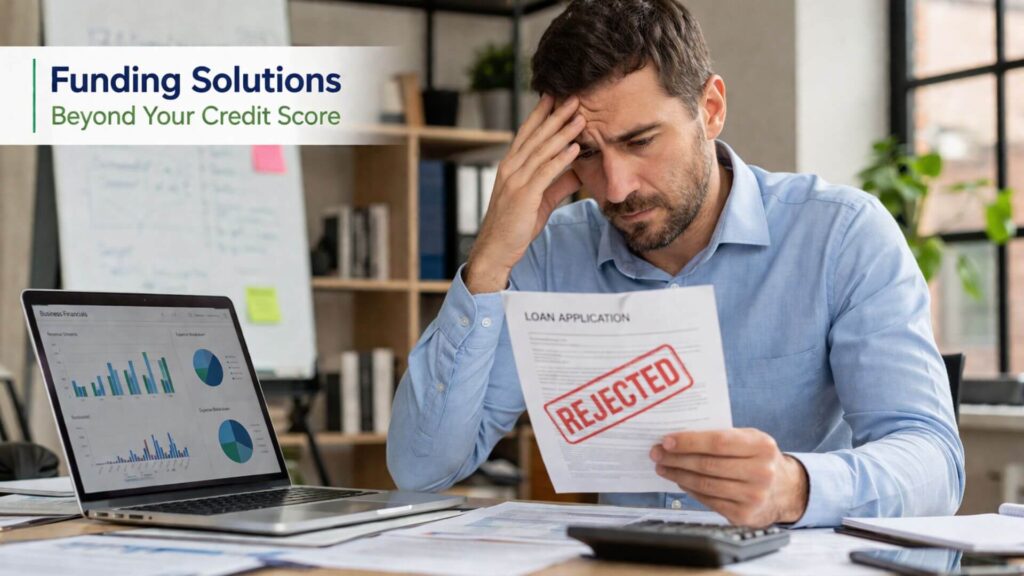
A low credit score can feel like a “Do Not Enter” sign for your business. Most entrepreneurs hear a “no” from their local bank and assume they’ve hit a dead end. But here’s a secret the big banks won’t tell you: your credit score isn’t your business’s heartbeat. While traditional lenders are stuck on a three-digit number, a whole world of business funding with bad credit exists that cares more about your daily revenue and future potential than a past mistake.
In today’s market, the lending landscape has shifted. Modern lenders now use advanced data and real-time cash flow analysis to support companies that the old system ignores. Having a less-than-perfect score might change how you access capital, but it doesn’t have to stop you from growing.
In this guide, we’re cutting through the noise to show you exactly how to navigate business funding with bad credit and secure the capital you need to scale, without the sugarcoating.
What Does “Bad Credit” Actually Mean for Entrepreneurs?
Before diving into solutions, it’s important to understand what ‘bad credit’ actually means in the world of business financing.
The general ranges of credit scores are as follows:
- Outstanding: 750+
- Good: 700 – 749
- Fair: 640 – 699
- Poor: 580 – 639
- Bad: Below 580
The majority of traditional banks demand a minimum credit score of 680 to 700 in order to approve business loans. If your score falls below this threshold, banks will usually decline your application, sometimes without explaining why.
What Credit Score Do Lenders Actually Look At?
Lenders may check your personal credit score, your business credit score, or both. If your business is newer, lenders often rely more heavily on your personal score. For more established businesses, your business credit history, tracked by agencies like Dun & Bradstreet, Experian Business, and Equifax Business, may also be reviewed.
It’s crucial to understand that alternative lenders frequently have more lenient credit requirements than traditional banks, opening doors that might otherwise remain closed.
Can You Really Get Business Funding With Bad Credit?
Yes, and this is not just marketing language. Thousands of small businesses with low credit scores access business funding options every year through channels other than traditional banks.
Here is why alternative lenders can be more flexible:
- Automated underwriting models assess multiple data points, not just credit scores
- Monthly revenue, bank statements, and business longevity are also reviewed
- Higher risk is accepted in exchange for higher interest rates
- Funding often happens quickly, with approvals completed within 24 to 72 hours
However, there are typically trade-offs associated with being approved despite having poor credit, such as lower loan amounts, shorter repayment terms, and higher interest rates. Making better decisions is aided by your comprehension of this process.
How Business Funding With Bad Credit Works
Here is a clear, step-by-step breakdown of the process from checking your position to getting funded.
Step 1: Know Where You Stand
Start by pulling your personal and business credit reports. You can access your personal credit report for free at AnnualCreditReport.com. For business credit, check with Dun & Bradstreet or Experian Business. Look for any errors, and if you find any, dispute them before applying even one corrected error, as this can improve your score.
Step 2: Understand What Lenders Evaluate Beyond Credit
Alternative lenders examine the entire picture of your company’s health. They examine the following key factors:
- Monthly revenue (most lenders want at least $10,000 to $15,000 per month)
- Time in business (many require 6+ months of operating history)
- Bank statements showing consistent cash flow
- Outstanding debts and existing loan obligations
- Industry type (some industries are considered more risky)
- Collateral availability (if seeking secured funding)
Step 3: Choose the Right Funding Type
Not all funding options work equally. Your chances of approval are greatly increased when you match your circumstances to the appropriate product. In the following section, we will discuss the main options.
Step 4: Plan Your Application
Before applying, you have to collect the following documents:
- 3–6 months’ worth of company bank statements
- ID issued by the government
- Business tax returns (if available)
- Proof of business ownership
- Voided business check
- Basic business financial statements
Having these ready speeds up the process and signals professionalism to lenders.
Step 5: Submit and Negotiate Terms
Once you receive an offer, read the full terms carefully. Pay attention to the Annual Percentage Rate (APR), repayment schedule, any prepayment penalties, and total cost of capital. If you have multiple offers, compare them side by side. You may have room to negotiate – especially if you have strong monthly revenue or are a returning customer.
Funding Options for Bad Credit Businesses
The most popular and easily accessible financing options for companies with low credit scores are as follows:
Funding Type | How It Works | Best For |
Merchant Cash Advance | The lender provides a lump sum; you repay via a percentage of daily card sales | Businesses with consistent card revenue |
Revenue-Based Financing | Repayments tied to a percentage of monthly revenue | Businesses with predictable monthly income |
Invoice Financing | Unpaid invoices can be borrowed against to release funds. | B2B companies with unpaid invoices |
Equipment Financing | Equipment serves as collateral; it’s easier to qualify | Businesses needing machinery or vehicles |
Business Line of Credit | Draw funds as needed up to a limit; pay interest only on what you use | Businesses needing flexible access to cash |
Microloans | Small loans often from nonprofits or CDFIs; flexible credit criteria | Startups or very early-stage businesses |
SBA Microloans | Government-backed; lower rates but more documentation | Businesses that can wait for longer approval processes |
Alternative Lenders vs. Traditional Banks
Understanding the difference between traditional banks and alternative lenders allows you to choose the best course of action for your situation.
Factor | Traditional Banks | Alternative Lenders |
Minimum Credit Score | 680 – 700+ | 500 – 600 (varies) |
Approval Speed | 2 – 8 weeks | 24 – 72 hours |
Documentation Required | Extensive | Minimal to moderate |
Interest Rates | Lower (6% – 15%) | Higher (15% – 80%+ APR) |
Collateral Required | Often yes | Often no |
Flexibility | Low | High |
Best For | Established businesses with strong credit | Businesses needing fast access or with credit challenges |
Key Insight: Traditional banks are not the only option. For businesses with bad credit, alternative lenders often represent the most practical and fastest path to funding, though at a higher cost.
Eligibility Requirements: What’s Required to Qualify
Requirements differ by lender and product, but the following is a general baseline for bad credit business funding:
Requirement | Typical Minimum |
Personal Credit Score | 500+ (some lenders go lower) |
Time in Business | 6 months or more |
Monthly Revenue | $10,000 – $15,000+ |
Business Bank Account | Required by most lenders |
Active Business Registration | Required |
No Open Bankruptcies | Most lenders require this |
Some lenders will also consider startups with less than 6 months in business, especially those with strong revenue or collateral backing. Microloans and CDFIs (Community Development Financial Institutions) can also be good options for newer businesses. Some lenders will also consider startups with less than 6 months in business, especially those with strong revenue or collateral backing. Microloans and CDFIs (Community Development Financial Institutions) can also be good options for newer businesses. If your business meets these basic criteria, you can check your funding eligibility in minutes with no obligation.
Pros and Cons of Business Funding with Bad Credit
Pros | Cons |
Accessible with low credit scores | Higher interest rates than traditional loans |
Fast approval, sometimes same day | Shorter repayment terms |
Flexible eligibility criteria | Smaller funding amounts in some cases |
Multiple product types to choose from | Risk of debt cycle if not managed carefully |
Can help build business credit over time | Some lenders charge origination or servicing fees |
No collateral required for many options | Less regulatory protection than bank loans |
Risks and Transparency: What to Watch Out For
Being honest about risk is part of making a smart financial decision. Here is what you need to know:
- High APRs: The effective APRs on some alternative funding products, particularly merchant cash advances, can be much higher than those on conventional loans. Prior to making a commitment, always determine the total repayment amount.
- Short Repayment Windows: Many bad credit funding products have repayment terms of 3 to 18 months. Make sure your revenue can comfortably cover daily or weekly payments.
- Automatic Debits: Many lenders pull repayments automatically from your business bank account. If cash flow dips, you may face overdraft issues.
- Prepayment Penalties: Some lenders charge fees if you pay off your loan early. Read the fine print.
- Predatory Lenders Exist: Be cautious of any lender that guarantees approval regardless of your situation, asks for upfront fees, or provides vague or evasive answers about terms. Work with established, reputable lenders.
Important: Never take on debt that you can’t afford to pay back. A loan for a business is a financial commitment. Before signing any contract, get financial advice if you’re not sure if the repayment terms are reasonable.
Is This Type of Funding Legit and Safe?
Yes, business funding for bad credit is a legitimate and legal financial category used by tens of thousands of businesses every year. Alternative lending is a regulated industry, though the level of regulation varies by state and product type.
Here’s how to make sure the lender you’re dealing with is reliable:
- Before signing anything, make sure the loan terms are clear and in writing.
- Make sure the lender is authorized to do business in your state.
- Seek out clear fee disclosures and the absence of any additional costs.
- Examine other business owners’ reviews on sites like Google, BBB, and Trustpilot.
- Avoid borrowers that pressure you to sign quickly without time to review terms
Working with established funding partners, those with clear credentials, real client reviews, and transparent underwriting, significantly reduces your risk.
Who Should Consider This Type of Funding?
Bad-credit business funding is not a good fit for every business. Here is a simple guide to help you decide:
This funding may be right for you if… | Consider other options if… |
You have consistent monthly revenue | Your revenue is unpredictable or very low |
You need funds within 24 – 72 hours | You can wait weeks or months for lower rates |
You have been declined by traditional banks | You qualify for SBA or bank loans |
You need a short-term cash flow bridge | You need long-term capital at low cost |
You have a clear plan to use and repay the funds | You are unsure how you will repay |
Stop Worrying About the Score: Start Planning the Growth
A low credit score or business funding with bad credit tells a story about where your business has been, but it doesn’t have to define where it’s going. The “locked door” of traditional banking is no longer the end of the road. With the right alternative funding partner, your revenue, your consistency, and your vision carry more weight than a three-digit number.
At Horizon Funding Group, we look past the credit report to see the real potential in your business. We specialize in connecting entrepreneurs with transparent, realistic financing from quick working capital to flexible lines of credit tailored to your unique situation.
Curious about what’s possible? Take a few minutes to explore your options with us today. It’s a simple, no-obligation step toward the capital you need to scale.
FAQs
-
1. What is the minimum credit score I need?
Most alternative lenders look for a score of 500 or higher. If your monthly revenue is strong, some may even go lower, as they prioritize your cash flow over your score.
-
2. Will checking my rate hurt my credit?
No. Most initial applications use a "soft pull," which does not affect your credit score. A hard inquiry usually only happens after you pick an offer and move toward final funding.
-
3. How fast can I get the money?
The process is built for speed. You can typically get approved within 24 hours, and funds are often deposited into your business account within 1 to 2 business days.
-
4. Do I need to put up my house or car as collateral?
Usually, no. Many bad credit options are unsecured, meaning they are backed by your business's future sales rather than your personal assets.
-
5. What is the most important thing lenders look for?
Consistent revenue. Lenders want to see steady bank deposits (typically $10k+ per month) to ensure you have the daily or weekly cash flow to handle the repayments.
-
6. Can I get funding if my business is new?
It’s possible, but you generally need at least 6 months of operating history. If you have less than that, you might need to look into microloans or equipment-specific financing.